
Every month, a lot of contractors in New Brunswick, Nova Scotia, PEI and Newfoundland pay for leads the same way they pay rent. The bill shows up, the leads trickle in, and when the payments stop, so do the calls.
There’s nothing wrong with paying for leads. Some lead platforms work well for the right business. But there’s a big difference between renting your visibility from a platform and owning it through your own Google rankings, and most contractors only ever hear one side of that story.
This guide walks through the lead channels contractors actually use in Atlantic Canada, what each one really costs you, and how to make the money you’re already spending build something that lasts.
The Lead Channels Atlantic Canada Contractors Actually Use
Most contractors here get work from some mix of five places. Only one of them is fully yours.
| Channel | How you pay | Who else sees the homeowner | What’s left if you stop paying |
|---|---|---|---|
| HomeStars | Free profile, paid membership for more visibility | Other pros listed in your category | Your reviews, but far less visibility |
| Google Local Services Ads | Per lead (call, message or booking) | Other contractors in the ad block | Nothing; the ads switch off |
| Facebook community groups | Free, but costs your time | Everyone tagged in the comments | Your reputation in that group |
| Kijiji | Free, with paid bumps | Every other ad in the category | Very little |
| Google organic and map pack | Your website and Google Business Profile | The homeowner contacts you directly | Your rankings, reviews and content |
HomeStars is the big one in Canada, and many contractors don’t realize it belongs to the same company as Angi and HomeAdvisor. It works best for businesses that collect a lot of reviews, because ratings drive who gets shown.
Google Local Services Ads (the “Google Guaranteed” or “Google Screened” ads at the very top of the results) charge per lead rather than per click. Google also offers credits for invalid leads in Canada and the US, which makes them one of the fairer paid options. Cost per lead varies widely by trade and town.
Facebook groups and Kijiji matter more in the Maritimes than almost anywhere. A single “Can anyone recommend a good roofer?” post in a local group can land you a job. It can also put you in a comment thread with ten competitors.
Organic and map pack visibility is the only channel where the work you put in keeps paying off after you stop actively spending on it.
What Happens When You Stop Paying
With rented channels, your visibility lasts exactly as long as your payments. Pause your membership or your ad budget in a slow month, and the leads stop that week. Start again in spring, and you’re paying full price to get back to where you were.
Owned visibility behaves differently. A well-built Google Business Profile, a website that clearly explains your services, and a steady stream of reviews keep working in the background. A homeowner in Dieppe searching for a deck builder in February can still find you, whether or not you spent anything that month.
That’s the core difference. Rented leads are an expense. Owned rankings are closer to equipment: an investment you make once, maintain, and keep using for years.
The Number That Matters: Cost Per Booked Job
Cost per lead is the number platforms like to talk about. Cost per booked job is the number that tells you whether a channel is making you money.
Cost per booked job = Monthly spend ÷ Jobs you actually booked
Here’s an example with round numbers. These aren’t real client figures, just a simple way to see how the math plays out.
| Shared lead platform | Owned local visibility | |
|---|---|---|
| Monthly cost | $1,000 (20 leads at $50) | $599 program |
| Leads per month | 20 | 5-10 |
| Jobs booked | 2 | 2-4 |
| Cost per booked job | $500 | about $150-$300 |
The shared platform sends more leads, but those homeowners are getting quotes from several contractors at once, so fewer turn into work. With owned visibility, the homeowner found you, picked you and called you directly.
The bigger difference shows up over time. The platform’s cost per job stays about the same every month. With owned visibility, the monthly cost stays flat while rankings and reviews keep building, so each additional job brings your cost per job down.
Run the formula with your own numbers. Include the time you spend chasing leads that never call back, because that’s a real cost too.
“But SEO Takes Forever”
This is the most common reason contractors keep renting leads: they assume building their own visibility takes years. When the foundations are done right, it often doesn’t.
A brand-new carpentry business in Moncton. Salt Shore Carpentry started with no website and no Google presence. After a new website, Google Business Profile optimization, local citations and regular content, its first leads came in about two weeks after launch. By month three, it was getting 4 to 6 qualified leads a month from search, without paid ads. Read the full case study.
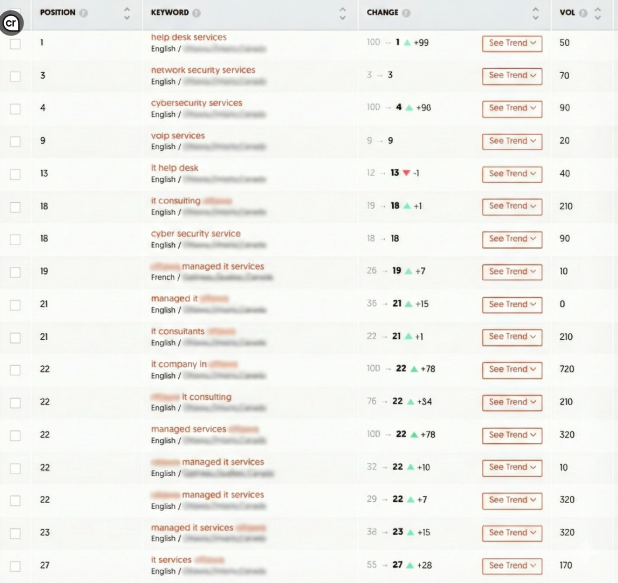
An IT company in Ottawa. Before Copper Rank, our team spent 13 years doing search marketing for IT companies across North America, one of the most competitive local search markets there is. When we rebuilt the website for an Ottawa IT company, it went from not ranking at all to #1 on Google for its core service within the first two weeks.
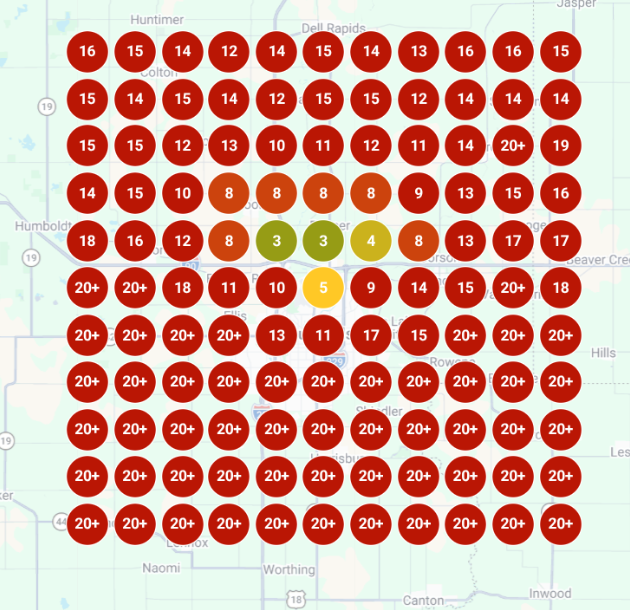
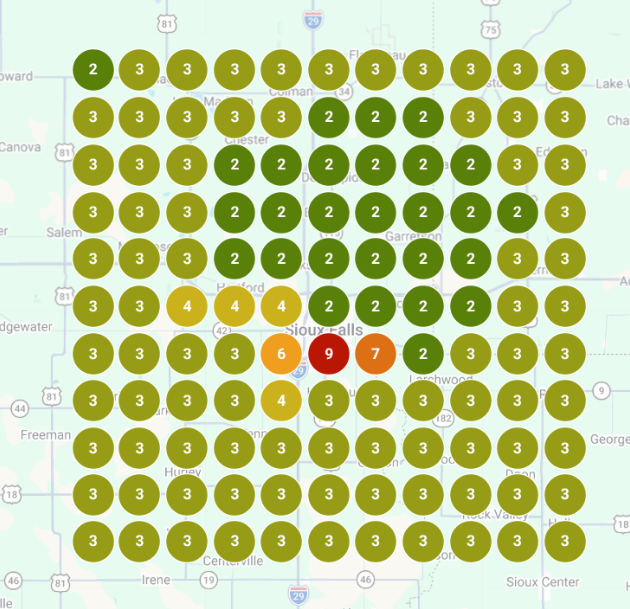
An IT company in South Dakota. Before touching anything else, we tested this company’s Google Maps visibility from 121 points around its city. It showed up in the map pack at just 2 of them, about 1.65% of the grid. Three weeks after we optimized its Google Business Profile, with no website changes, ads or new content, it was in the top three at 94% of the points on a map twice as wide.
All three results came from the same fundamentals: a clear website, a properly set up Google Business Profile, consistent business listings and ongoing content. Those same fundamentals work for roofers, carpenters, electricians and plumbers.
How to Make Your Rented Channels Build Owned Rankings
You don’t have to quit HomeStars or turn off your ads tomorrow. The smarter move is setting up the channels you already pay for so they also strengthen your own Google presence.
- Treat every profile as a business listing. Google cross-checks your business name, phone number and service area across the web. Make your HomeStars, Facebook and directory profiles match your Google Business Profile exactly, and link each one back to your website.
- Ask for Google reviews first. Homeowners check an average of six review sites before choosing a business, and Google, Facebook and AI tools like ChatGPT are the most used for local recommendations, according to BrightLocal’s 2026 Local Consumer Review Survey. Google reviews help your map pack rankings directly, so make them your first ask.
- Turn Facebook recommendations into reviews. When someone tags you in a “who do you recommend?” post, thank them and ask if they’d leave the same words on Google. A comment fades in a day. A review keeps working for years.
- Show up in French too. New Brunswick is Canada’s only officially bilingual province, and plenty of homeowners search for a couvreur or charpentier instead of a roofer or carpenter. If you serve francophone communities, add French to your Google Business Profile description and your service pages. Most of your competitors haven’t.
- Get ready for AI recommendations. More homeowners are asking ChatGPT and Google’s AI answers who to hire. Those tools draw on your reviews, your business listings and your website, not on who paid for a lead.
Which Mix Is Right for Your Business?
There’s no single answer, and anyone who tells you to drop every platform isn’t looking at your business. Here’s how we usually think about it:
- Brand-new business: Build your Google Business Profile and website first. Paid leads can fill the calendar while your rankings catch up, but don’t let them replace the foundation.
- Established business paying for leads: Keep what’s profitable, cut what isn’t, and put part of that budget toward visibility you’ll own.
- High-ticket work, like roofing or full renovations: Local Services Ads can be worth it alongside strong organic visibility, because one job covers a lot of lead costs.
- Busy with referrals already: You may only need the basics, so you’re easy to find when someone looks you up after a recommendation.
At Copper Rank, we look at your market, your competition and what you already have before recommending anything. Sometimes that means a full search program. Often it means getting the local fundamentals right, the same way we did for Salt Shore Carpentry.
We work with trades businesses across Atlantic Canada, including Moncton, Halifax, Fredericton and Saint John.
Local Visibility programs start at $599/month.
Leave a Reply